

What If Your Land Could Pay You Without You Ever Touching a Plow?
You do not need to be a farmer to earn income from agricultural land. This guide explores smart, practical strategies that allow landowners to generate consistent capital gains without ever picking up a shovel.
Most people hear “agricultural land” and immediately picture early mornings, muddy boots, and backbreaking harvests. tractor driving .But here is what experienced landowners already know. Your farmland can quietly generate serious income while you sleep, travel to enjoy, or playing games. or run another business entirely. The question is not whether agricultural land can earn money without farming. The real question is which strategy works best for your situation and help for capital gain.
If you are actively searching for how to generate income from agricultural land without farming, you are already ahead of most landowners. While others let their rural acres sit idle or sell them out of frustration, smart investors are turning the same land into consistent, passive revenue machines. In 2026, with rising demand for renewable energy, rural tourism, and commercial land use, farmland has quietly become one of the most flexible investment assets available. And you do not need a tractor to profit from it
The Smart Way to Lease Your Land and Collect Rent Without Lifting a Finger
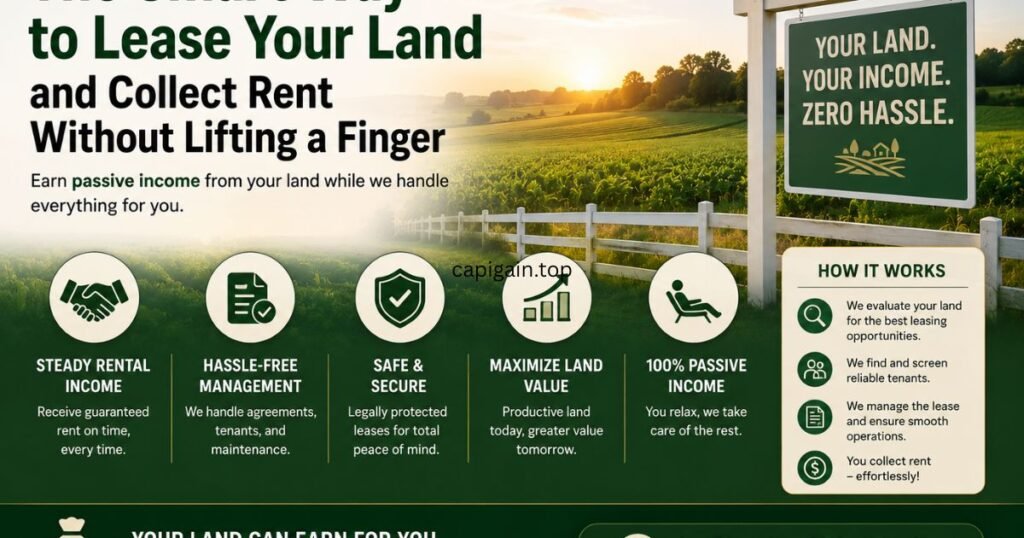
One of the most reliable and time-tested ways to earn from agricultural property is a simple land lease. You own the land, someone else does all the work, and every month a payment arrives in your account. Farmers, livestock operators, and agricultural businesses are constantly searching for good land to rent .and many of them prefer long-term agreements that last five to ten years or more.
What makes this option especially attractive is its simplicity. You handle none of the crops, none of the labor, and none of the seasonal risk. and non of the weather problems. Your only job is choosing a trustworthy tenant and signing a solid lease agreement. In many rural regions, per-acre rental rates have been steadily rising alongside food demand . making this a genuinely appreciating income stream and capital gaining. For landowners who want the lowest possible involvement, leasing to a local farmer remains one of the strongest answers to the challenge of earning from agricultural land without traditional cultivation and hard work.
Solar Farms and Wind Leases — When Your Empty Fields Become an Energy Asset
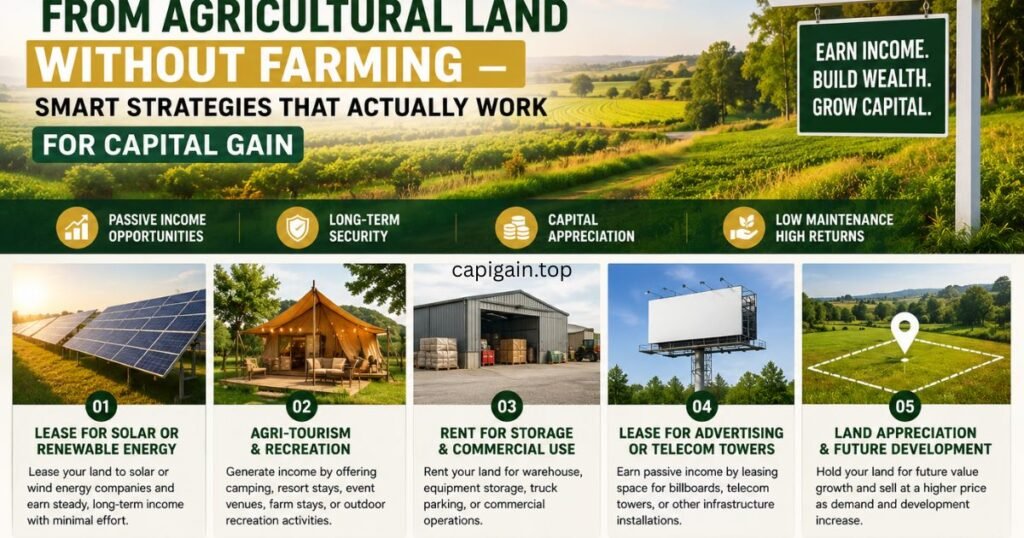
Here is something that surprises most first-time landowners: renewable energy companies will pay you handsomely just to use your open space. Solar developers and wind energy operators need large, flat, unobstructed land .exactly what most agricultural properties offer. In exchange for a long-term lease, typically running twenty to thirty years, they pay consistent monthly or annual fees that often exceed what traditional farming would generate from the same acreage.
The numbers can be genuinely impressive. Solar farm leases, depending on location and market rates, can generate hundreds to thousands of dollars per acre annually. Wind turbine agreements tend to offer even higher per-unit payments. The landowner retains ownership, the energy company handles all installation and maintenance, and the income keeps arriving year after year with no crop cycles, no weather anxiety, and no labor costs. For anyone exploring how to generate income from agricultural land without farming, renewable energy leasing deserves serious consideration .especially as governments worldwide continue pushing clean energy expansion.
Agritourism . Turning Your Countryside Into a Destination People Pay to Visit
Urban life has made people hungry for open space, nature, and experiences that feel real organic weather. This shift in consumer behavior has quietly created a booming opportunity for rural landowners.
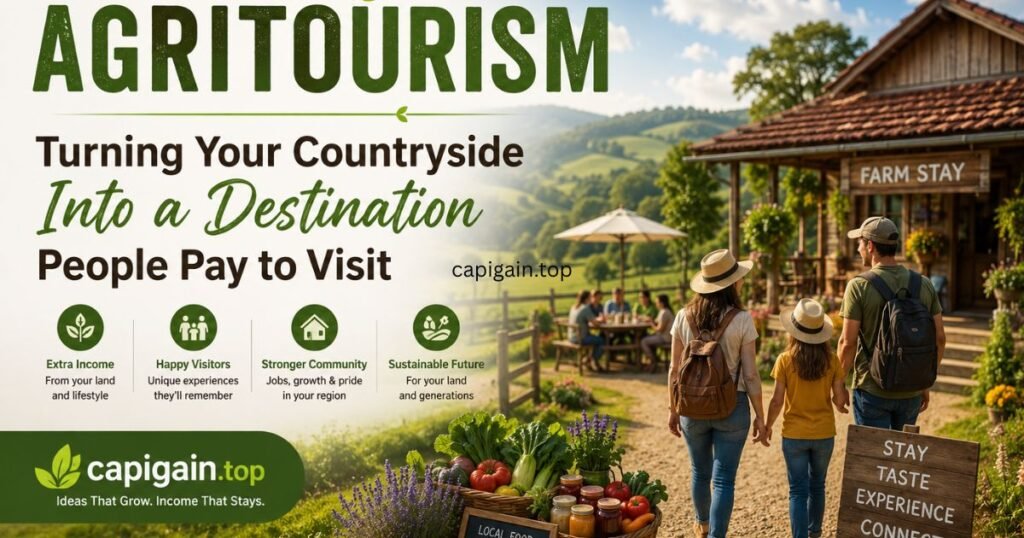
Agritourism opening your agricultural property to paying visitors . is one of the fastest-growing income and capital gaining strategies for farmland owners who want nothing to do with traditional cultivation.
The possibilities here are genuinely wide. Your land could host weekend campers, glamping guests, outdoor weddings, photography sessions, school field trips, fishing experiences, horseback riding, or even seasonal festivals. Some landowners install a few luxury tents or wooden cabins and list them on short-term rental platforms, turning quiet acres into year-round hospitality businesses. Others keep it simple — a flat fee for access to a peaceful outdoor space is enough for urban families escaping city pressure.
What makes agritourism especially powerful is that it taps into an emotional need rather than a functional one. People are not just paying for space. They are paying for the feeling of the countryside, the silence, the stars at night. Agricultural land that would earn modest crop income can generate multiples of that through well-marketed tourism experiences. As rural travel trends continue accelerating, this strategy represents one of the most creative and profitable paths for landowners asking how to profit from agricultural property without growing a single crop.
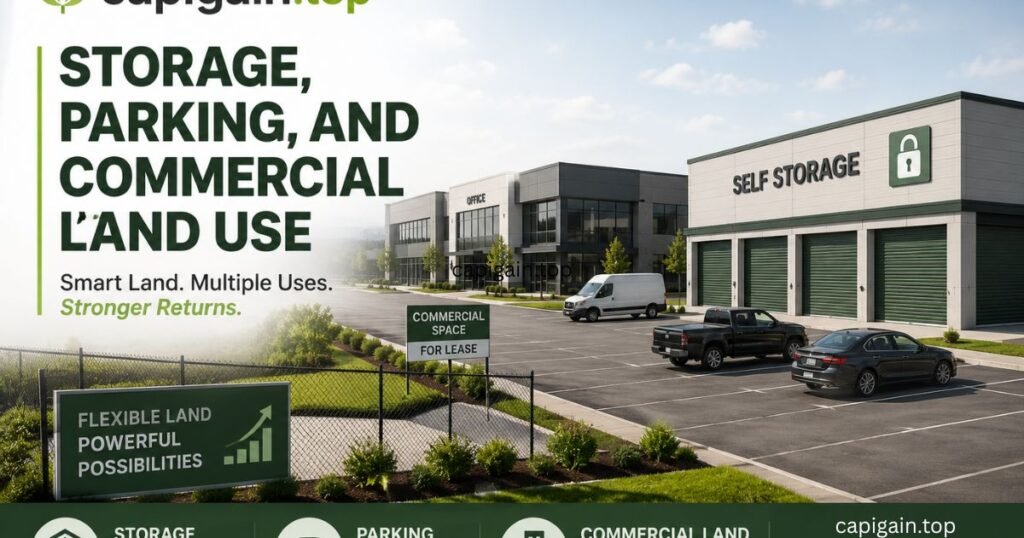
Storage, Parking, and Commercial Land Use
The Overlooked Income Stream Next to the Highway
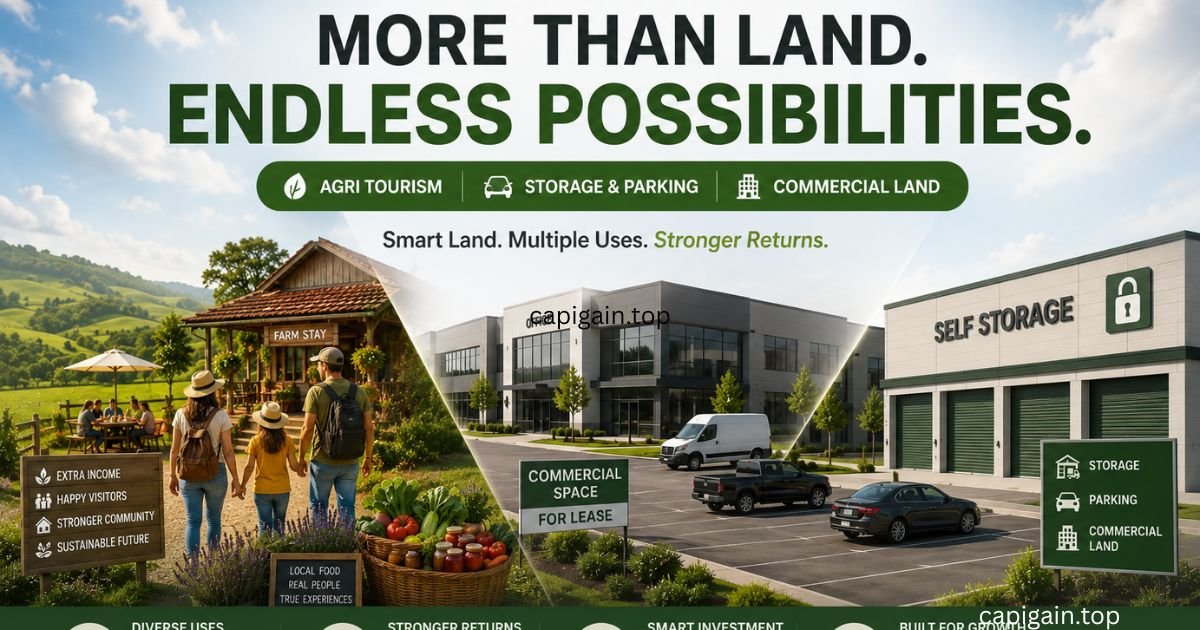
If your property sits near a town, highway, logistics corridor, or industrial zone, the land itself may already be positioned for straightforward commercial income. Businesses of every size need affordable outdoor space .for equipment storage, truck and trailer parking, construction material staging, shipping container rentals, and vehicle holding.
The cost of operating this type of income stream is remarkably low. No structures may be required at all, depending on what you are leasing. Some landowners simply grade a gravel surface, install basic fencing, and begin marketing storage space to local contractors and transport companies. Others take it further by developing self-storage units or partnering with telecommunications companies to lease small footprints for mobile towers . which often generate strong passive income from a fraction of an acre.
Agricultural land near growing suburban areas holds an additional long-term advantage. As cities expand outward, the value of surrounding rural land tends to rise significantly. sometimes dramatically. Landowners who purchased farmland near developing corridors years ago have watched values multiply many times over without ever farming a single season. Holding land strategically, using it for commercial income in the short term, and positioning it for future development is a layered wealth strategy that sophisticated investors quietly use while others overlook it entirely.
you must have to keep in touch with https://capigain.top for real capital gain ideas

Muhammad Qaisar is the founder and lead researcher at Capigain.top, a financial education platform dedicated to helping everyday people understand capital gains across cryptocurrency, real estate, gold, and agricultural investments. With a passion for making complex financial topics simple and accessible, Muhammad writes in-depth, research-backed guides that help readers make smarter investment decisions. He believes that financial knowledge should be available to everyone, not just experts.