

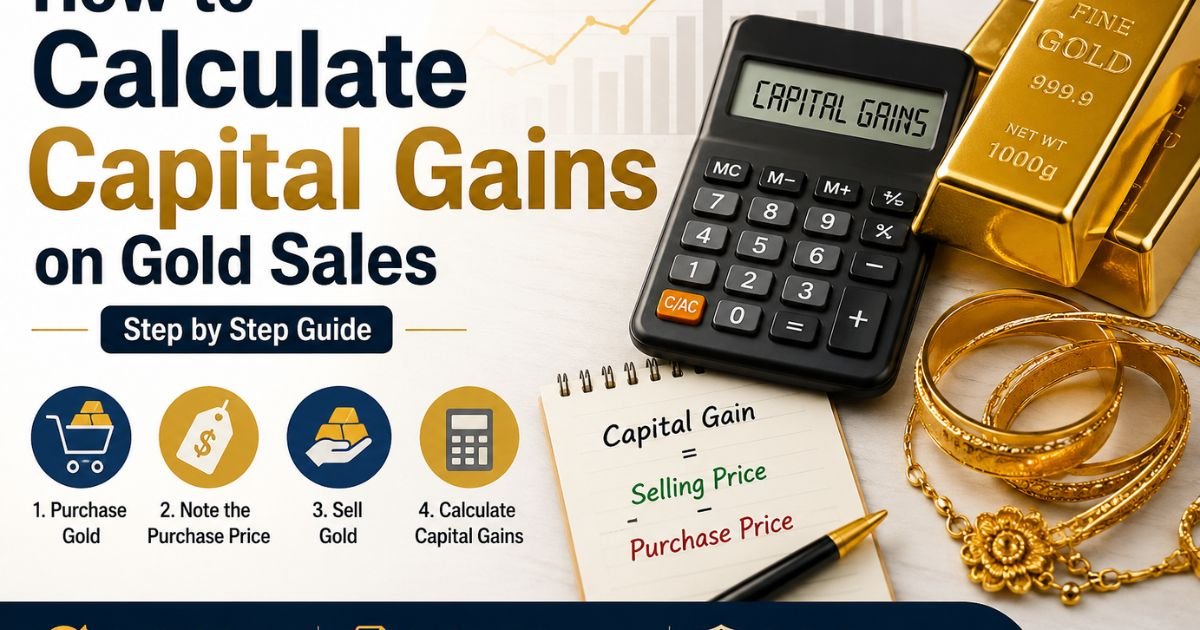
Most people sell their old gold jewelry when they need money. but those who sell at the right time and in the right way get double as much out of the same piece of jewelry. The only difference is understanding and learnig.how to calculate capital gains on gold sales

Investing in gold has been considered a safe and popular investment from centuries. Many people buy gold to preserve their savings, meet future financial needs, or make a profit. But when it comes time to sell gold, most people only look at the sale price and don’t estimate how much profit or loss they actually made. This is where the concept of Capital Gain becomes important.
Article Topics
What is Capital Gain on Gold Jewelry?
1.How Gold Price Works . Melt Value vs. Retail Value
2. How to Calculate Capital Gain ,With Real Examples
3.5 Best Places to Sell Gold
4.Sell at the Right Time .Make More Profit
5. Tax and Legal Issues
6. Common Mistakes most People Make
7. Frequently Asked Questions
What is a capital gain?
Capital gain is a simple concept: when you buy something and later sell it for a higher price, the profit you get is your capital gain.
Basic formula:
Capital Gain = Selling price − Purchase price − Expenses
Example: You bought a gold necklace in 2019 for $800. In 2026, you sold it for $1,400. The dealer’s fee was $50.
Your Capital Gain = $1,400 − $800 − $50 = $550
But gold jewelry is a little different. The jewelry includes both the actual amount of gold (melt value) and the cost of craftsmanship (making charges). When you sell, the buyer usually pays only the melt value, which is why earning a capital gain from jewelry is prudent.
Understanding capital gain is useful not only for investors but also for ordinary individuals. Many people sell gold jewelry or stored gold during financial emergencies without understanding whether they actually made a profit.
Knowing your capital gain helps with:
- Understanding your actual return on investment
- Making better financial decisions
- Planning future investments
- Tracking investment performance
- Improving financial management
How to Determine the Original Cost of Gold Purchase
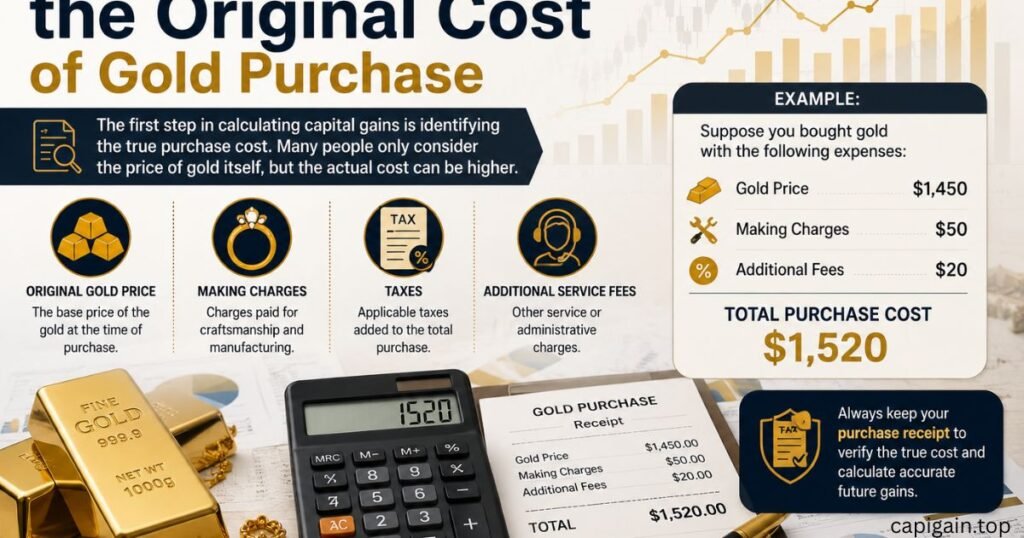
The first step in calculating capital gains is identifying the true purchase cost. Many people only consider the price of gold itself, but the actual cost can be higher.
Purchase costs may include:
- Original gold price
- Making charges
- Taxes
- Additional service fees
Example:
Suppose you bought gold with the following expenses:
- Gold price = $1,450
- Making charges = $50
- Additional fees = $20
Total purchase cost:
$1,450 + $50 + $20 = $1,520
Many people ignore these extra expenses, which can lead to incorrect profit calculations later.
An important tip is to always keep your purchase receipt because it helps verify the actual cost when calculating future capital gains.
How to Determine the Actual Selling Amount
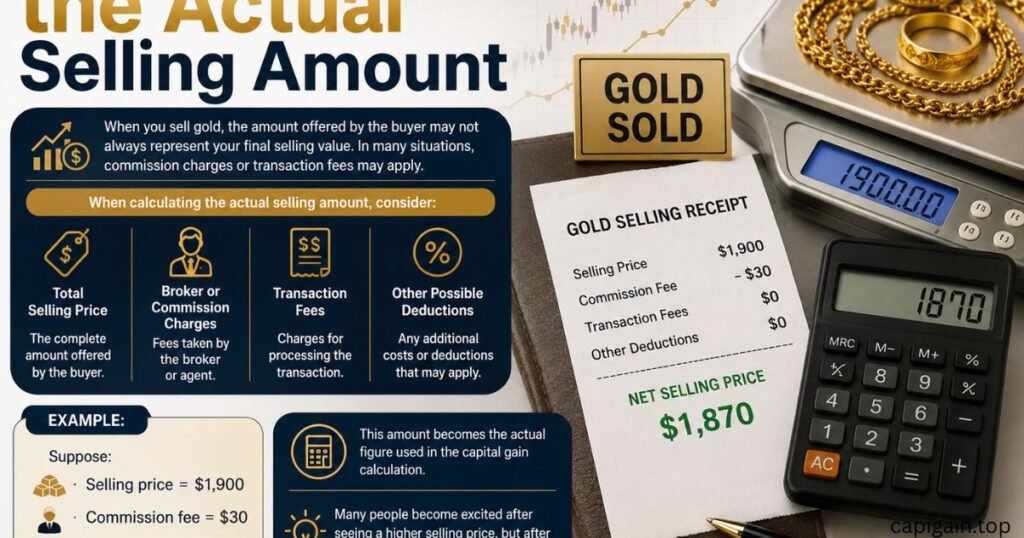
When you sell gold, the amount offered by the buyer may not always represent your final selling value. In many situations, commission charges or transaction fees may apply.
When calculating the actual selling amount, consider:
- Total selling price
- Broker or commission charges
- Transaction fees
- Other possible deductions
Example:
Suppose
- Selling price = $1,900
- Commission fee = $30
Net selling price:
$1,900 − $30 = $1,870
This amount becomes the actual figure used in the capital gain calculation.
Many people become excited after seeing a higher selling price, but after deducting expenses, the actual profit may be lower than expected.
Step-by-Step Calculation of Capital Gains on Gold Sales
Now let’s move to the actual calculation process.
The basic formula is:
Capital Gain = Selling Price − Purchase Price
Let’s understand it using a practical example.
Suppose
Total purchase cost:
$1,520
Net selling amount:
$1,870
Calculation:
$1,870 − $1,520
Result:
$350
In this example, your total capital gain is $350.
The process is simple, but accuracy depends on including all related costs properly.
A valuable point to remember is that many investors only celebrate a price increase without checking their actual returns. Sometimes gold prices rise, but commissions and additional fees reduce the final profit. That is why understanding the complete calculation matters more than simply looking at the selling price.
Common Mistakes and Useful Tips for Better Investment Decisions, how to calculate capital gains on gold sales

Most new investors make several common mistakes while calculating capital gains.
1. Ignoring Additional Costs
Many people do not include making charges, taxes, and fees, making their profits appear larger than reality.
2. Not Keeping Receipts
Always keep purchase and selling records for future reference.
3. Selling Too Quickly
Selling gold without observing market trends may reduce potential profits.
4. Focusing Only on Price Increases
Many investors become happy simply because gold prices increased, while the actual goal should be understanding real profit.
Useful Investment Tips:
- Research the market before buying
- Track gold price trends
- Keep a complete record of expenses
- Save purchase and selling dates
- Create a long-term investment strategy
Conclusion
Calculating capital gains on gold sales is an important part of financial planning. If you properly include purchase costs, additional expenses, and actual selling value, you can easily determine your true profit.
Many people assume that any increase in gold prices automatically means profit, but experienced investors always calculate the complete picture. If you are new to investing, start developing the habit of keeping accurate records. Proper calculations will help you make smarter financial decisions and build a more organized and profitable investment strategy in the future.

Muhammad Qaisar is the founder and lead researcher at Capigain.top, a financial education platform dedicated to helping everyday people understand capital gains across cryptocurrency, real estate, gold, and agricultural investments. With a passion for making complex financial topics simple and accessible, Muhammad writes in-depth, research-backed guides that help readers make smarter investment decisions. He believes that financial knowledge should be available to everyone, not just experts.